
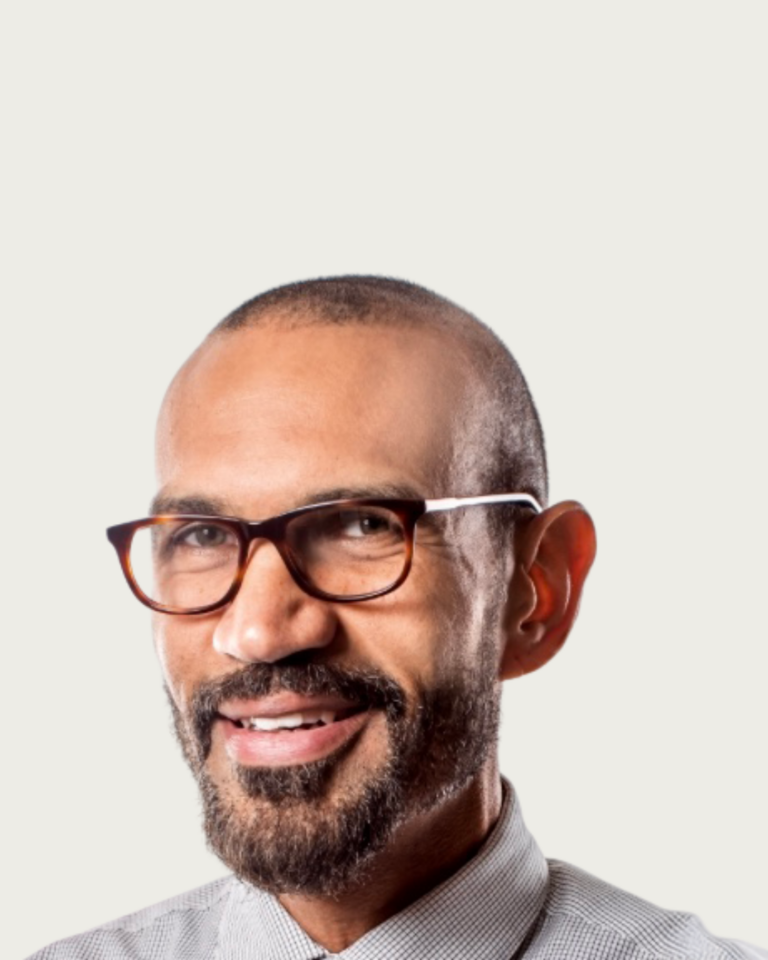
Nicodemus Ford
Director/ Founder
Nicodemus Ford LLC, Design With Joy
Who I Am and What I Do I am an educational researcher, policy analyst, and systems change practitioner with more than twenty years of experience working at the intersection of equity, continuous improvement, and community-centered learning design. I work primarily across California’s rural education landscape, though my collaborations extend nationally and internationally. My practice is grounded in a core conviction: that improvement research is most powerful when it centers the voices and lived experiences of those most marginalized by systems — students, families, educators in under-resourced communities, and communities of color. Contexts for Improvement Work My improvement work spans K–12 school networks, county offices of education, alternative and continuation high schools, tribal education communities, and multi-district rural networks across Northern California. As Director and Founder of Nicodemus Ford LLC, I serve as the backbone organization for the Rural Professional Learning Network (RPLN) — a statewide initiative I founded and scaled from a single-county partnership into a network with a 31-member advisory board, reaching hundreds of educators across some of California’s most geographically isolated and under-resourced districts. RPLN operates as a continuous improvement network in practice: we convene educators and leaders around shared problems of practice, use data collaboratively to surface inequities, and co-design responsive interventions at the school and district level. I also serve as a Subject Matter Expert for the U.S. Department of Justice on federal educational equity litigation, where I design inquiry protocols, conduct qualitative interviews with hundreds of staff, students, and families, and synthesize findings into policy recommendations. This work applies rigorous mixed-methods approaches to assess whether systemic conditions — governance structures, resource distribution, instructional practices — are producing equitable outcomes for students. A Recent Improvement Research Project One of the most significant improvement projects I have led in recent years is a multi-year evaluation of RPLN’s network model, conducted in partnership with Policy Analysis for California Education (PACE). This research used mixed methods to examine how rural district networks can build continuous improvement capacity and drive meaningful change in student outcomes. Our published findings demonstrated that the network model positively impacted both student outcomes and district-level capacity for data use and collective inquiry — a finding that has since informed how philanthropic partners like the Gates Foundation and California Endowment invest in rural education infrastructure. Alongside this, I led a restorative justice implementation and improvement initiative that resulted in the co-authored and published Guidebook for the People: Integrating Systems, Restorative Practices (2022). This work was presented at four national and international conferences, including the 12th Annual European Forum on Restorative Justice, and 80% of practitioners who engaged with the framework reported measurable improvements in community outcomes. The improvement cycle embedded in this project — from needs identification through co-design, piloting, and publication — reflects the kind of disciplined inquiry and community accountability I bring to all my work. Programs and Courses with CI Content Through RPLN and my independent consultancy, I design and facilitate professional learning experiences that build practitioners’ capacity for continuous improvement and equity-centered inquiry. These include multi-day convenings for district leaders and school principals focused on using data to identify and address opportunity gaps; coaching series for school leadership teams on implementing restorative practices with fidelity and measuring their impact; and cross-sector strategy sessions that bring together educators, policymakers, community organizations, and philanthropic partners to co-create improvement frameworks for systems-level change. I also bring continuous improvement content to higher education contexts. As a former Adjunct Professor at Wayne State University, I developed graduate-level courses in literacy instruction and designed specialized coursework for 110 aspiring educators pursuing Special Education certification. I currently hold a Master of Education in History and Political Science from Marygrove College and am completing a Master of Science in Restorative Practices at the International Institute for Restorative Practices (expected 2027), deepening my grounding in the evidence base for restorative approaches to school culture and discipline reform. Field Building Work Field building is central to how I understand my role as a practitioner-researcher. Beyond running RPLN, I serve as a City Commissioner for the City of Sacramento, where I lead civic engagement initiatives and apply improvement-oriented data analysis to local governance and policy accountability — work that has generated more than 60,000 community comments and shaped district-level decisions affecting over 20,000 residents. I am an active presenter at national and international conferences including AERA, ASCD, National Equity Project, and the European Forum on Restorative Justice, and I have been involved in building cross-sector field infrastructure connecting education, workforce development, government, technology, and civic sectors. I hold active partnerships with WestEd, PACE, the California Endowment, the Gates Foundation, and the U.S. Department of Justice, and ongoing consultancies with the Yuba Water Agency, El Dorado County Office of Education, and San Juan Unified School District, among others. Areas of Expertise My core areas of expertise include: educational equity research and policy analysis; continuous improvement in rural and under-resourced district networks; restorative practices design and implementation; multi-stakeholder facilitation and convening design; qualitative and mixed-methods research; grant development and resource mobilization (with a track record of securing $1.15M+ from foundations including Gates Foundation and California Endowment); intergenerational and youth-centered co-design; and career-connected and competency-based learning. I bring a particular focus to practical measurement — designing inquiry tools and evaluation frameworks that are usable by practitioners in the field, not just researchers — and to the kind of translational writing that makes complex improvement findings accessible and actionable for educators and policymakers alike. I am excited to connect with ISN members working at the intersections of equity, community, and disciplined improvement inquiry, and to contribute to a community that takes seriously both the rigor of improvement science and the relational dimensions of change.